
Why a Property Survey for a Fence Matters More Than You Think
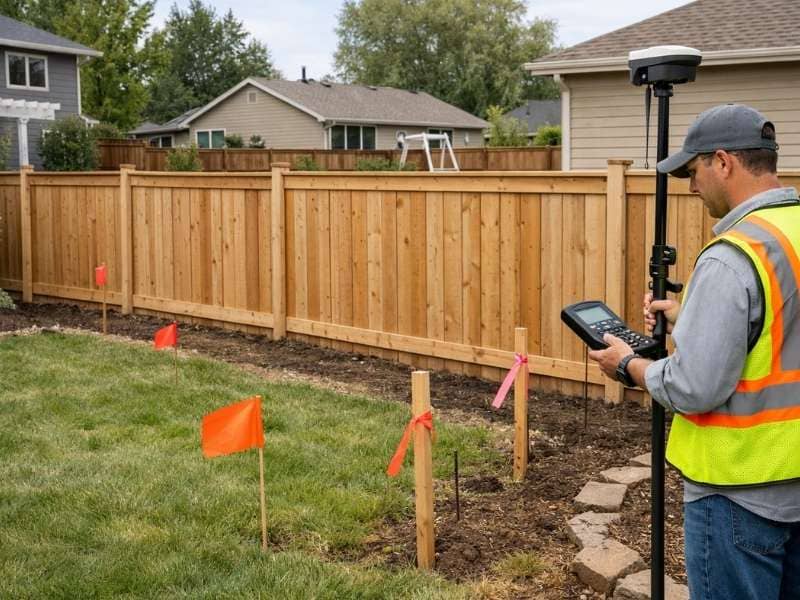
Putting up a fence seems simple enough. You pick a style, hire a contractor, and in a few days the job is done. But in Boston, Massachusetts, fence projects go sideways more often than people expect, and it almost always comes back to one thing: nobody confirmed where the property line was before the work started.
Getting a property survey for a fence is one of those steps that feels optional right up until it isn’t. Once the posts are set and a neighbor starts asking questions, everything gets harder to fix.
The Line Is Rarely Where You Think It Is
Most homeowners plan a fence by looking at what is already there. The old fence, a line of shrubs, where the lawn ends. It feels like a reasonable guide. Usually it isn’t.
Old fences were not necessarily built in the right place. A previous owner may have put one up based on a best guess and gotten it close, but not quite accurate. Over the years, posts shift and ground settles. A fence that was once a foot inside the boundary can gradually drift until it crosses the line. It happens slowly enough that nobody notices.
The only reliable way to find the true boundary is to have a licensed surveyor locate it using the deed, land records, and field measurements. A property survey for a fence gives you a documented starting point that no one can reasonably dispute later. Looking at the old fence line and assuming it is correct is not the same thing, even if it looks right.
A Legal Problem Most Homeowners Have Never Heard Of
There is a legal concept called adverse possession, and most people do not learn about it until they are already dealing with it.
The basic idea is this: if someone uses land that does not belong to them, openly and continuously, for a long enough period without the owner objecting, they can eventually gain a legal right to it. In Massachusetts, that period is 20 years.
A fence is one of the clearest examples of this. If your neighbor’s fence has been sitting two feet inside your yard for two decades and you never challenged it, a court may find that your neighbor now has a claim to that strip of land. It does not matter whether the fence was placed there on purpose. What matters is that it was there, and nobody pushed back.
This comes up regularly in Massachusetts property disputes. Fences get built, owners move on, new buyers inherit the situation, and years pass before anyone looks carefully. By then, the legal picture is genuinely messy.
When the Fence Sits on the Line, Both Neighbors Are Responsible
If a fence runs directly along the shared property line, Massachusetts law considers it a partition fence. Both neighbors own it and both are on the hook for maintaining it.
That arrangement works fine until the fence needs work and one neighbor does not want to pay. When that happens, either party can take the dispute to the town’s fence viewers, local officials whose specific job is to settle these kinds of arguments. If they find in your favor, you may be able to recover double what the other party owed.
The catch is that many homeowners do not actually know whether their fence is on the line or just near it. A few inches either way changes who is responsible for what. When a repair bill shows up and nobody is sure of the answer, what should be a quick conversation turns into something much more difficult.
Boston Has Its Own Layer of Rules
Massachusetts has statewide rules about fences and property lines, but individual cities and towns can add requirements on top of those. Boston has done so in a number of neighborhoods.
Local rules here can cover height limits, permit requirements, minimum setbacks from the property line, and design restrictions in historic or conservation districts. Some parts of Boston have preservation guidelines that limit fence styles in ways that go well beyond state law.
Starting a fence project without checking local ordinances is taking an unnecessary risk. The potential outcomes include fines, a stop-work order, or being told to remove the fence and redo it correctly. None of that is cheap, and none of it is difficult to avoid if you do the research before breaking ground.
The Problems That Show Up Later
For homeowners who skip the survey, the issues tend to appear at inconvenient times and in predictable forms.
Removal orders. A fence found to be sitting on a neighbor’s land can be ordered removed by a court. The homeowner who built it covers the cost of taking it down, along with any legal fees.
Permit issues. Plenty of fence contractors in Massachusetts will not start without survey markers in place. No markers, no permit, no work, at least not the right way.
Disputes that escalate. What starts as a disagreement over a few inches can grow into something that requires a lawyer. Legal costs for a property dispute in Massachusetts can easily climb into several thousand dollars, which tends to be considerably more than the survey would have cost.
Problems at closing. When a homeowner eventually sells, the buyer’s surveyor will measure the property. A fence that does not match the actual boundaries will come up during the transaction at the worst possible time.
Do It Before the Fence Goes Up
Get a property survey for the fence before anything else. A surveyor marks the corners, the contractor builds to those marks, and there is a clear record of where everything sits. That documentation is easy to reference if a question comes up a year or ten years later.
For anyone buying a property that already has a fence on it, having the lines checked before the sale closes is worth the time. Sorting out a placement problem before you own the property is a lot simpler than dealing with it afterward.
Frequently Asked Questions
Can my neighbor put a fence right on the property line?
Yes, in most cases. Massachusetts law permits fences on a shared boundary line, and when one is there, both owners share responsibility for it. The problem is not the placement itself. It is when someone builds without confirming where the line actually is.
I just bought a house and the existing fence looks like it might be in the wrong place. What should I do?
Get a survey. When you buy a property, you inherit whatever boundary issues come with it. A survey will tell you whether the fence lines up with the actual property boundaries, and knowing that early gives you the most options for addressing it.
Will a fence contractor tell me where my property line is?
Some will try. Most reputable contractors in Massachusetts prefer to have survey markers in place before they start, because it protects them as much as it protects you. An estimate from a contractor is not a legal determination of where your boundary falls.
Who are fence viewers and when do they get involved?
Fence viewers are officials appointed by Massachusetts towns to handle disputes between neighbors about boundary fences. If you and your neighbor cannot agree about a shared fence, either of you can ask a fence viewer to step in and make a ruling. That ruling is legally binding.